
What is REAL-TIME RENDERING?
Real-time rendering is an advanced technique that enables the rapid conversion of 3D models into 2D images. Unlike traditional rendering, which can take hours to produce a frame, real-time rendering accomplishes this in less than 1/30th of a second. In other words, it allows users to interact with 3D environments almost instantly.
1.1. What is the difference between real-time rendering and offline rendering?
The key differences between real-time rendering and offline rendering lie in speed, quality, interactivity, and intended use. Take a closer look in the summary table below:
| Real-time Rendering | Offline Rendering | |
|---|---|---|
| Processing speed | Fast (usually under 1/30 second per frame) | Slow (can take minutes to hours per frame) |
| Image quality | Good, but may sacrifice detail to ensure performance | Very high, with realistic lighting and detailed shadows |
| Interactivity | Users can interact directly in real time | Pre-rendering images, no real-time interaction |
| Hardware | Replies on powerful GPU | Uses CPU or Render farm |
| Applications | Games, virtual reality (VR/AR), simulations, interactive architecture, etc | Films, CGI, advertising, architectural visualization, etc. |
1.2. Two advanced technologies commonly used in the rendering process
Ray tracing
Ray tracing is a technique in 3D computer graphics used to simulate the behavior of light in the real world in order to produce highly photorealistic images. This method works by tracing the paths of simulated light rays from the camera or viewer’s eye into a 3D scene and calculating the light interactions those rays encounter as they strike objects in the environment.
Ray tracing is capable of simulating complex optical effects such as:
- Reflection
- Refraction
- Soft shadow
- Depth of field
- Motion blur
- Global illumination
And more advanced phenomena like caustics and chromatic dispersion, etc
However, ray tracing is computationally intensive. Each pixel may require dozens or even hundreds of rays, and these rays can further reflect, refract, or pass through multiple surfaces, leading to significant processing demands and long render times.
Let’s look at an example to better understand this:
For a single 1920×1080 image, if each pixel requires 10 rays, the system would need to trace over 20 million rays per frame, which demonstrates just how resource-intensive the process can be.
Rasterization
Rasterization is the process of converting images from vector graphics (based on geometric shapes such as lines, circles, triangles, etc.) into raster images — a collection of pixels displayed on the screen.
In 3D graphics, rasterization is the most widely used rendering technique for real-time applications, particularly in video games and VR/AR environments.
How it works
- 3D models are broken down into many small triangles
- Each triangle is projected onto the screen plane, similar to how light passes through a camera lens – transforming the 3D scene into a 2D image.
- The system determines which pixels fall inside each triangle. These pixels are then “shaded” based on properties such as the base color, lighting conditions, the camera’s perspective, and texture mapping
- Once all triangles are processed, the screen displays a 2D image that closely resembles the original 3D model
However,
To achieve such impressive rendering speed, rasterization sacrifices image quality when compared to ray tracing. Complex optical effects cannot be fully simulated with rasterization alone and often require additional techniques to enhance image.
Benefits and limitation of real - time rendering
2.1. Benefits
Interactivity
By leveraging rasterization alongside modern rendering techniques, real-time rendering can analyze, process, and display updated images almost instantly in response to user interactions – delivering a smooth, engaging, and highly interactive experience.
Resource and Time Efficiency
Instead of simulating the entire lighting environment, real-time rendering only calculates the pixels that appear on the screen, significantly reducing the number of computations required.
Additionally, this technology trades off a certain level of accuracy in favor of rendering speed — most shadows and lighting effects are pre-simulated or approximated.
Flexibility
Thanks to real-time interactivity, any changes can be made and instantly visualized in the virtual space. This not only shortens response time significantly but also creates a highly flexible creative environment, where designers can fine-tune and evaluate ideas visually in a simulated real-world context.
2.2. Limitations
Image Quality:
In order to optimize rendering time, one of real-time rendering’s greatest strengths also becomes its inherent weakness. To achieve near-instant display speeds, the technology often simplifies or simulates complex elements such as lighting, shadows, and micro details. As a result, the visual quality it produces typically falls short of the photorealism achieved by offline rendering.
Complex Interface and Significant Initial Investment:
Any software requires time for users to become familiar with and master its tools and real-time rendering software is no exception. Part of the challenge lies in their interface, which often demands a certain level of technical knowledge. Additionally, the relatively high upfront investment can pose a significant barrier for many businesses looking to adopt this technology into their workflow.
However, these very challenges have paved the way for the growth of specialized visual agencies, which offer real-time rendering services at more accessible costs — effectively solving this problem for many companies.
Applications of real-time rendering
Games & Entertainment
This is undoubtedly the most well-known application of real-time rendering. The technology has unlocked unprecedented levels of interactivity and immersion, allowing game frames to appear instantly in response to each user action. In the future, it promises even greater advancements in visual quality, bringing graphics closer to true photorealism.
Architecture, Interior design & Real Estate
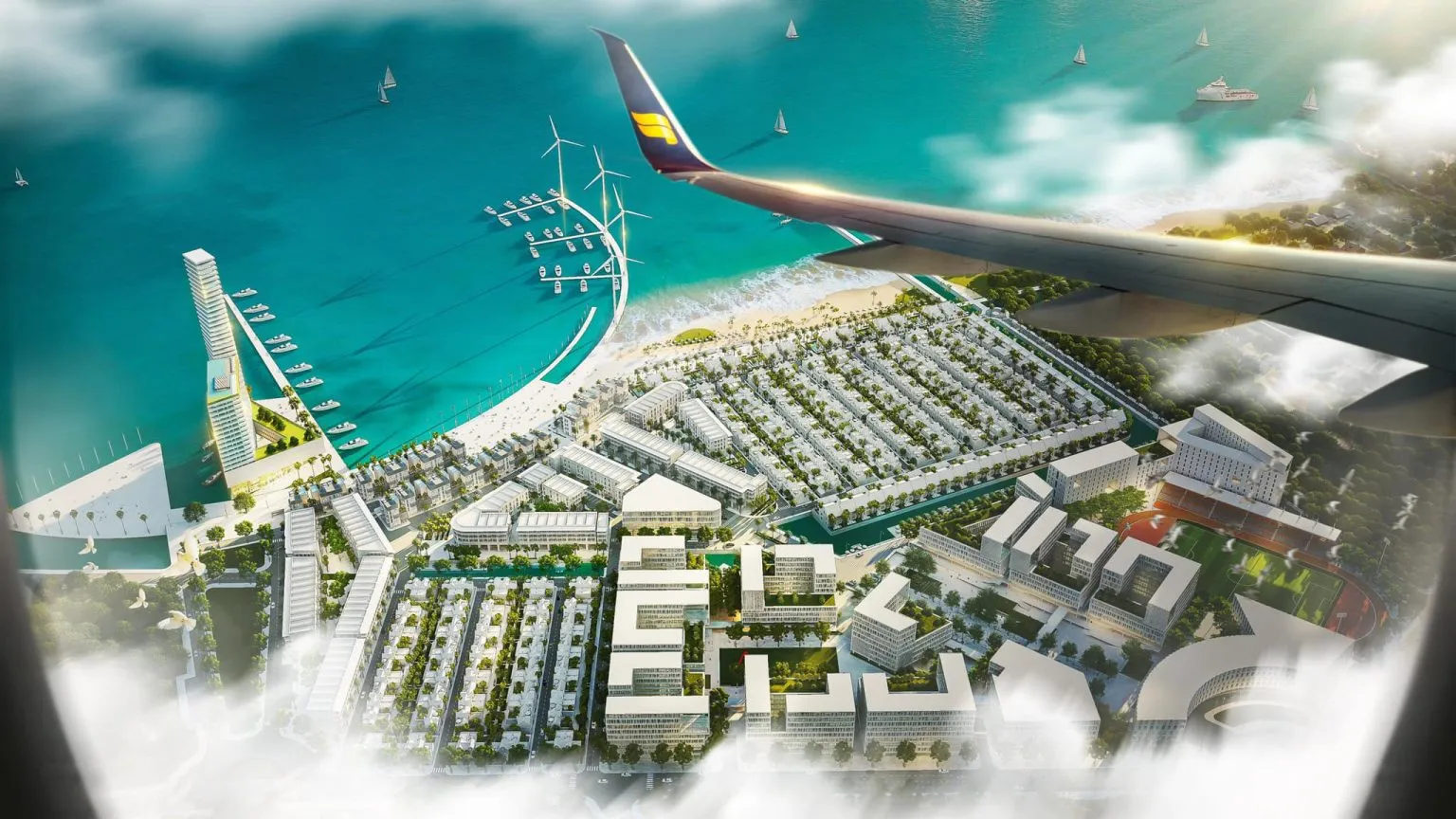
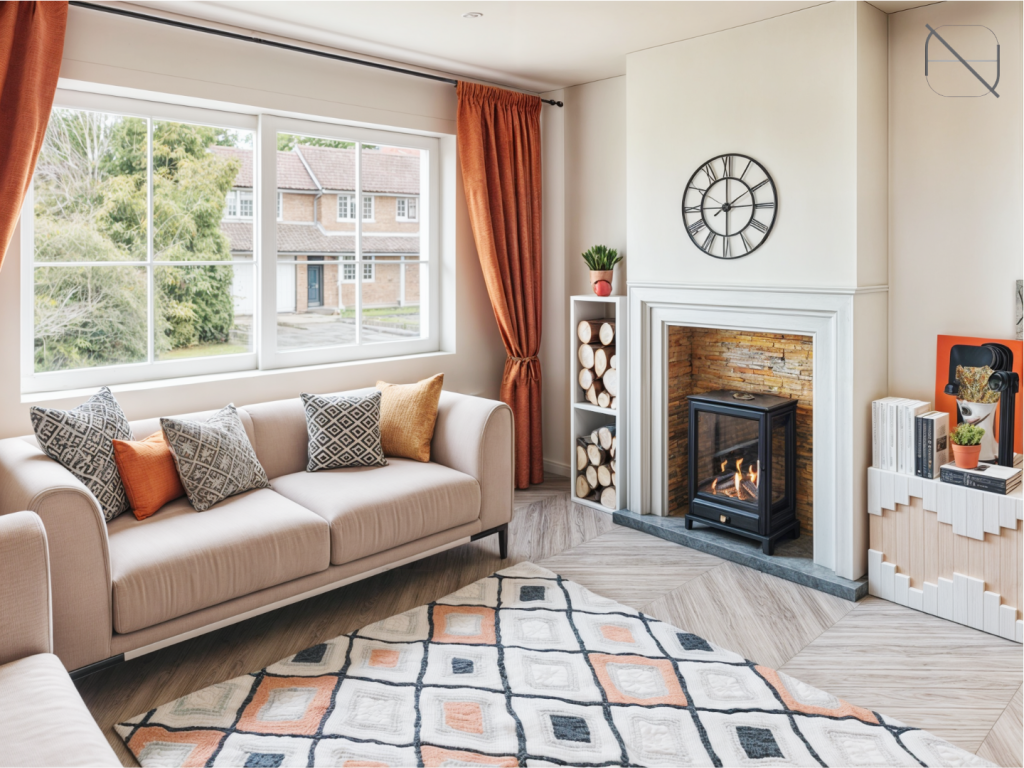
Have you ever imagined your future home and wished you could walk through it before it’s built? With real-time rendering, designers can easily create and customize immersive virtual spaces tailored to each client’s vision, significantly minimizing design errors. More importantly, you can interact with the space in real time, adjusting elements like wall colors, furniture, lighting, and more, giving you greater control and confidence in every design decision.
Moreover, with the integration of virtual reality (VR) technology, clients are no longer limited to viewing 3D models on a screen, they can now step into a fully immersive virtual space, move freely, observe from every angle, and experience the design firsthand. This highly realistic experience allows clients to make faster decisions while also fostering a deeper emotional connection with the design.
Applications of real-time rendering
E-commerce
With the rapid growth of e-commerce platforms, distributors are increasingly investing in how consumers interact with their products. Real-time rendering, combined with AR technology, has introduced a new direction, transforming the traditional shopping experience into something far more immersive and intuitive. Products are no longer confined to the screen; they can now be “placed” directly into the user’s real-life environment, allowing for clearer visualization and more confident purchasing decisions.
Education & Training
Thanks to real-time rendering technology, simulating complex experiments and procedures in virtual environments has become easier, more intuitive, and more realistic than ever before. High-risk or difficult-to-replicate scenarios, such as surgery, firefighting, or emergency response in hazardous conditions, can now be safely practiced in fully simulated environments.
This not only gives learners more opportunities to train and enhance their skills but also reduces risks, lowers costs, and enables more in-depth, hands-on education in settings that closely resemble real-world conditions.
Conclusion
Real-time rendering is not only a remarkable technological advancement but also a transformative tool that redefines how we interact with the digital world. From shopping, gaming and education to architecture, and real estate, this technology is being widely adopted – unlocking more immersive, personalized experiences than ever before.
With its immense potential and the support of emerging technologies like AR, VR, and AI, real-time rendering will continue its rapid growth and become an essential part of the visualization journey across various industries.